
Choosing the right doors for your home is important as individual goals, needs, and budgets will vary so it’s important to know what you want to achieve and prioritise this. In this blog, our experts at Doordeals break down some of the most popular external and internal door styles, their pros and cons and how to ensure you’re making the right choice for your home.
What are the Different Styles of Doors
Both internal doors and external doors come in a selection of styles, each with their own advantages and disadvantages, in aesthetic appeal, longevity and performance. Below, we’ve outlined some of the most common styles that have been popular inside and outside homes for decades.
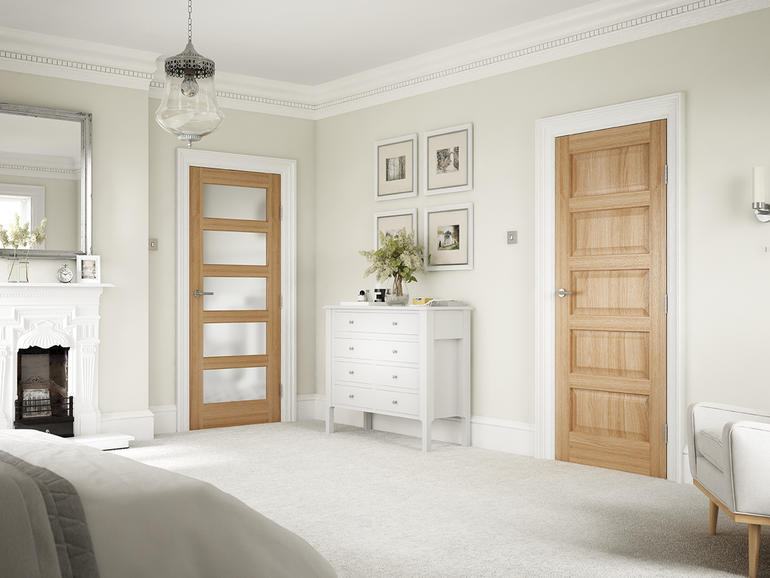
Types of Internal Door
Type of internal Door | Characteristics |
Panelled doors have raised panels on the surface of the door varying from two to 6 panels depending on the style | |
Flush doors are flat and smooth with no detailing on the surface | |
Glazed doors feature one or more glass panels for lighting and aesthetic purposes. | |
Shaker doors feature at least one flat panel with a raised frame, similar to popular wall panelling | |
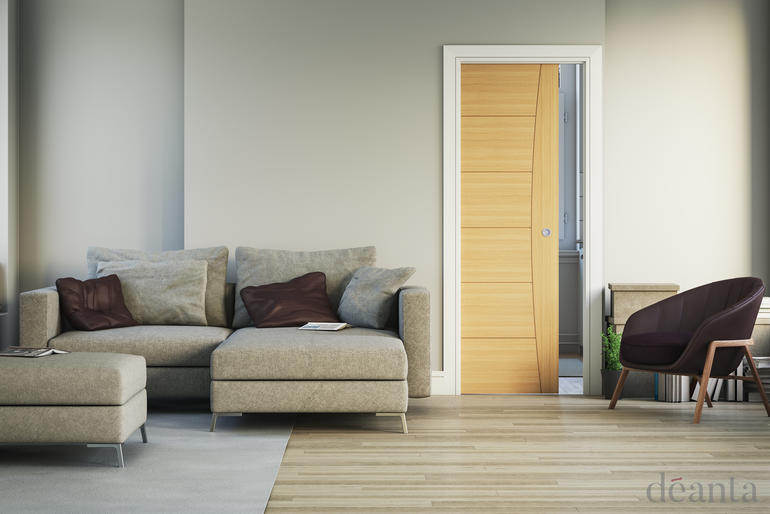
Pocket doors are sliding doors that maximise space by sliding into the wall recess itself |
Types of External Doors
Type of External Door | Characteristics |
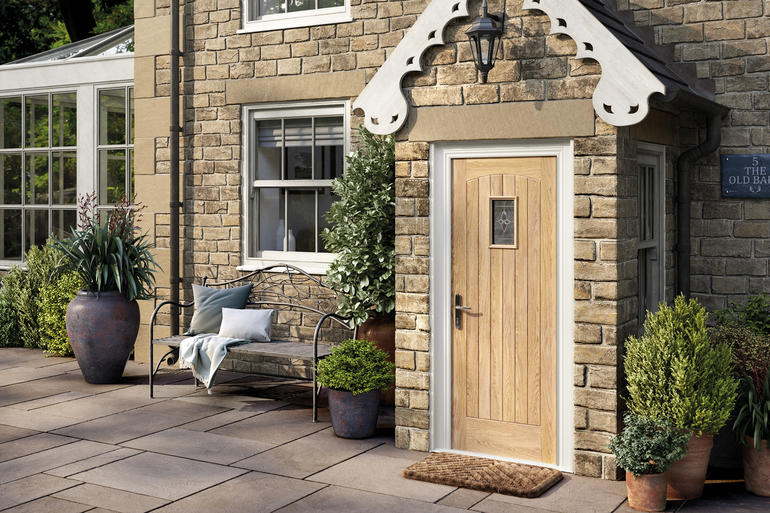
Front doors are the entry way to the home and are designed to weather the elements, available in either solid or glazed with various colours and finishes on offer | |
French doors are glazed door pairs popular for balconies, patios and gardens | |
Sliding Doors | Sliding doors are typically glazed panels attached to a track where the open door slides back over the opposite pane |
Bi-fold doors are doors made up of numerous separate sections which open by sliding along a track one by one and folding back on themselves |
Door Types by Build
Door Type | Characteristics | Key Considerations |
Hollow Core Doors | A veneer made of wood or other materials that encase a honeycomb centre made of cardboard, or plastics. | Lightweight, prone to damage, poor sound insulation. |
Solid Core Doors | A wooden veneer encasing a centre filled with engineered wood, particle board or other engineered fibres. | Heavy, Durable, good sound proofing and thermal insulation. More expensive than hollow core doors. |
Solid wood | A door made entirely of solid wood. Typically one piece but they can be made of multiple pieces. | Best for durability, noise and thermal insulation. Heaviest and can react more to heat, light etc due to the natural qualities of wood. May require more maintenance depending on use. |
What is the Most Common Type of Door
Panelled doors are typically the most common type of internal door with styles varying from traditional 1930s panelled doors to more modern alternatives. Other common styles of internal door include flush doors and glazed doors which can lend themselves to more traditional influences or contemporary styles, depending on the range.
What Door Style is Most Popular?
4 and 6 panelled doors have routinely proven themselves as the most popular door styles, maintaining strong levels of popularity for decades making them the perfect choice for adding character to both modern homes as well as period properties.
What Interior Doors are Timeless?
Panelled, shaker or glazed doors all offer universally timeless appeal whether you’ve got a contemporary home or a traditional period property. Glazed doors are a particularly good choice as not only do these offer an abundance of different styles but allow more natural light to flow through homes making interior design easier when selecting things like wall colours, furniture and flooring.
What are the Best Modern Doors?
Shaker doors are considered amongst the best modern doors as they have a timeless but sleek design and are available in both solid and glazed options. So whatever your personal style, shaker doors can add a sleek finish to your space. Partnered with sleek, modern accessories and hardware, these contemporary doors create a stunning contemporary look perfect for modern homes.
What are the Best Interior Doors?
The best interior doors will depend on several factors, your personal style, the type of home you’re creating and the requirements for your home, for example; good thermal insulation, noise reduction, fire safety, light or space. Below, we’ve highlighted some of our top pics for the best interior doors to suit a host of needs.
Best Interior Doors for Sound Proofing
The best doors for sound proofing are solid wooden doors such as oak or solid core door alternatives, which can provide good levels of sound proofing and aesthetic appeal without the price tag. Unlike hollow core doors, the density of these doors acts as a buffer against soundwaves.
Best Interior Doors for Warmth
Again, solid wood doors, particularly oak, offer brilliant thermal insulation. Other alternatives include solid core doors with engineered wood centres. Both of these are heavy, dense options which lock heat into rooms. If your doors are experiencing poor energy efficiency we recommend checking their performance, consulting our indepth guide to energy efficient doors.
Best Interior Doors for Space
The best doors for space are clever solutions such as pocket doors and internal bifold doors which don’t need to open inwards or outwards into available space on either side of the door. Pocket doors require more structural work due to the way they function; opening into space within the wall itself. Interior bifold doors still require some structural work to install the tracks and alter the doorways, if necessary but both are brilliant space saving solutions.
Best Interior Doors for Safety
Fire doors are the best interior doors for safety in the home. Providing 30 minutes to an hour of additional protection in case of fire, preventing this from spreading further through the property. While a legal requirement for rental properties including HMOs we also recommend these for applications in kitchens and common areas. Our guide to fire doors contains further information if you’re considering fire doors for your home.
What Type of Door Lasts the Longest?
Typically, solid wood or solid core doors will last the longest of all interior door styles, thanks to the quality of wood and other materials used.
It’s important to remember every door, no matter their type or style, requires some level of maintenance whether staining, sealing, oiling hinges or refreshing woodwork and paint. However, at the point of purchase you can make choices that reduce these maintenance commitments by opting for longer lasting doors, which are often more expensive but costs balance out long term when comparing maintenance or replacement costs .
What is the Average Lifespan of a Door?
You can expect doors to last between 20 and 50 years, depending on door design, materials used, application and maintenance. Properly maintained doors may last longer than advised, and on the contrary; poor maintenance will drastically reduce the lifespan of your doors.
What is the Strongest Door you Can Buy?
The strongest internal door styles are solid engineered core and solid wood doors. Their build lends themselves to excellent levels of durability because of the strong levels of solid wood involved in their manufacture. If considering front doors or external doors, composite doors or aluminium doors are the strongest, most commonly used doors for residential settings.
Choosing Doors
As we’ve discussed, choosing doors and making the right choice will be down to several factors:
- Budget and cost
- Performance; thermal or sound insulation, lighting advantages, fire safety etc.
- Personal style
With over 30 years experience supplying residential and commercial doors, our expert team can help you shortlist some of our products to suit your individual needs. We’re also able to make other recommendations such as maintenance products, hardware or items you’ll need such as fire door kits. If you’d like further help contact our team for personalised advice tailored to your project.